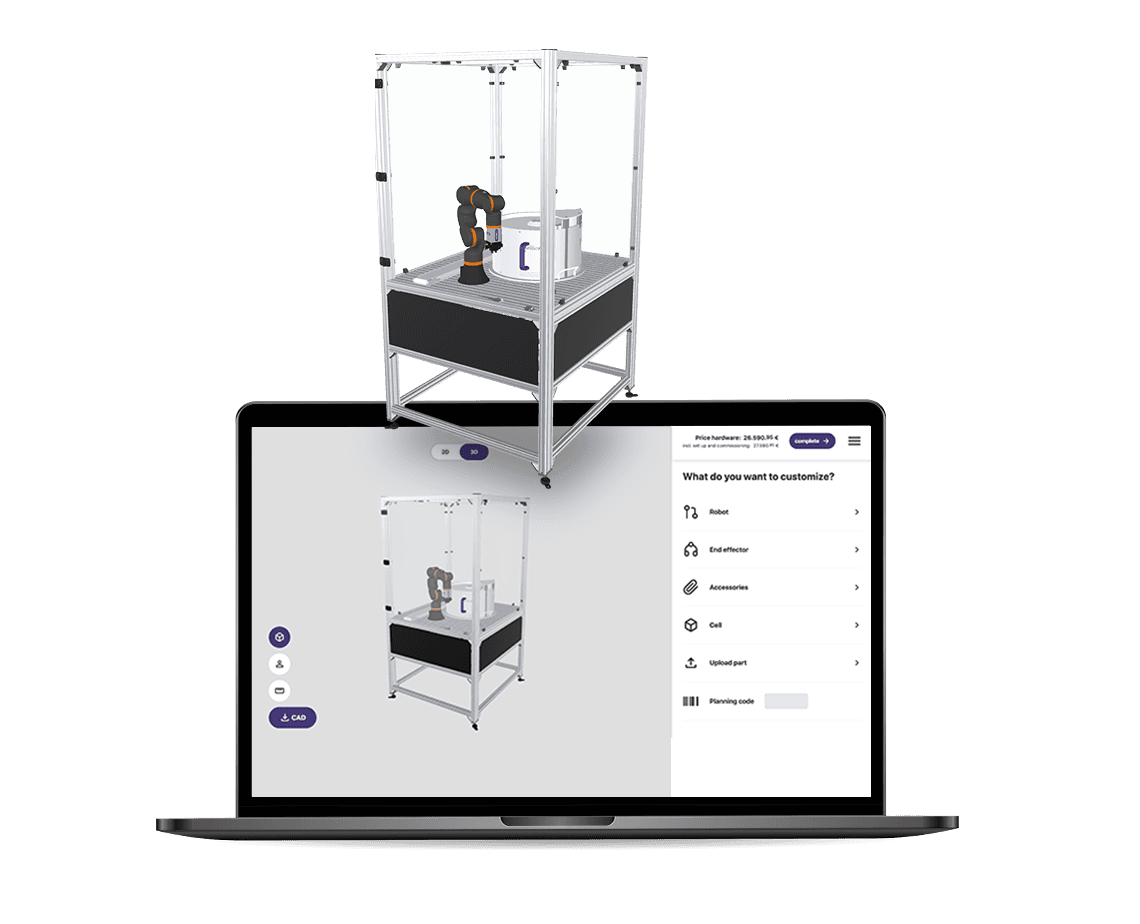
Unitree G1 EDU | U1-U14 | Plateformes de développement humanoïdes
Plateformes de développement Unitree G1
Les plateformes de développement Unitree G1 Edu, ainsi que les variantes Professional et Ultimate, sont des systèmes robotiques humanoïdes conçus pour la recherche, le développement et la robotique applicative. Le développement secondaire de haut et de bas niveau, un SDK, des algorithmes d'IA et un dock d'extension 100 TOPS permettent de créer des applications personnalisées. Selon le modèle de base, 23 ou 29 degrés de liberté sont disponibles. Les variantes Professional et Ultimate complètent la plateforme par des solutions de préhension et de main préconfigurées, dont certaines disposent de capteurs tactiles et de caméras RGB montées au poignet. Cela permet notamment de développer et de tester des applications de préhension, de manipulation et d'IA.
Sur demande
plus TVA et port
- Conception de la cellule et sélection des composants
- Programmation et sécurité
- Installation
Encore une question technique ?Clarifiez-la gratuitement avec un RBTXpert
Produits phares
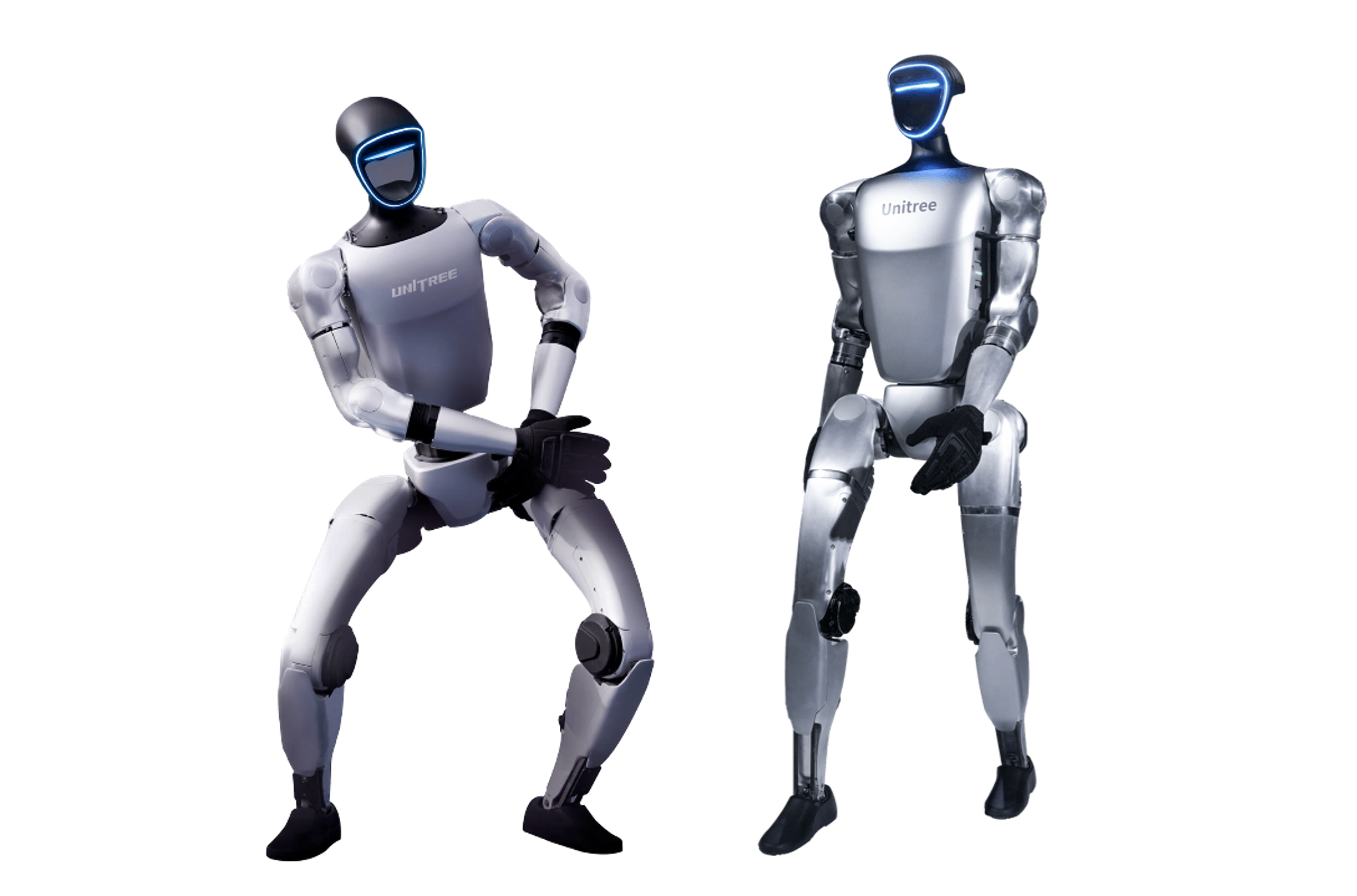
The differences between the development platforms
G1 EDU Standard | 23 DOF | basis of the Professional variants --> Dummy Hand | EDU-U1
G1 EDU Plus | 29 DOF | basis for Ultimate variants --> Dummy Hand | EDU-U2
G1 EDU- Professional (23 DOF Basis)
Professional A → Dex3-1 | 3 Finger | EDU-U9
Professional B → Dex3-1 | 3 Finger with tactile sensors | EDU-U10
Professional E → BrainCo Revo 2 Basic | 5 Finger | EDU-11
Professional F → BrainCo Revo 2 Touch | 5 Finger with tactile sensors | EDU-12
Professional G → Dex2/5 | 5 Finger | EDU-14
Professional H → Dex1-1 Gripper Plus
Professional I → Wuji Hand 2 | 5 Finger
G1 EDU- Ultimate (29 DOF Basis)
Ultimate A → Dex3-1 | 3 Finger | EDU-U3
Ultimate B → Dex3-1 | 3 Finger with tactile sensors | EDU-U4
Ultimate C → Inspire DFQ | 5 Finger | EDU-U5
Ultimate D → Inspire E2 | 5 Finger | with tactile sensors | EDU-U6
Ultimate E → BrainCo Revo 2 Basic | 5 Finger | EDU-U7
Ultimate F → BrainCo Revo 2 Touch | 5 Finger with tactile sensors | EDU-U8
Ultimate G → Dex2/5 | 5 Finger | EDU-13
Ultimate H → Dex1-1 Gripper Plus
Ultimate I → Wuji Hand 2 | 5 Finger
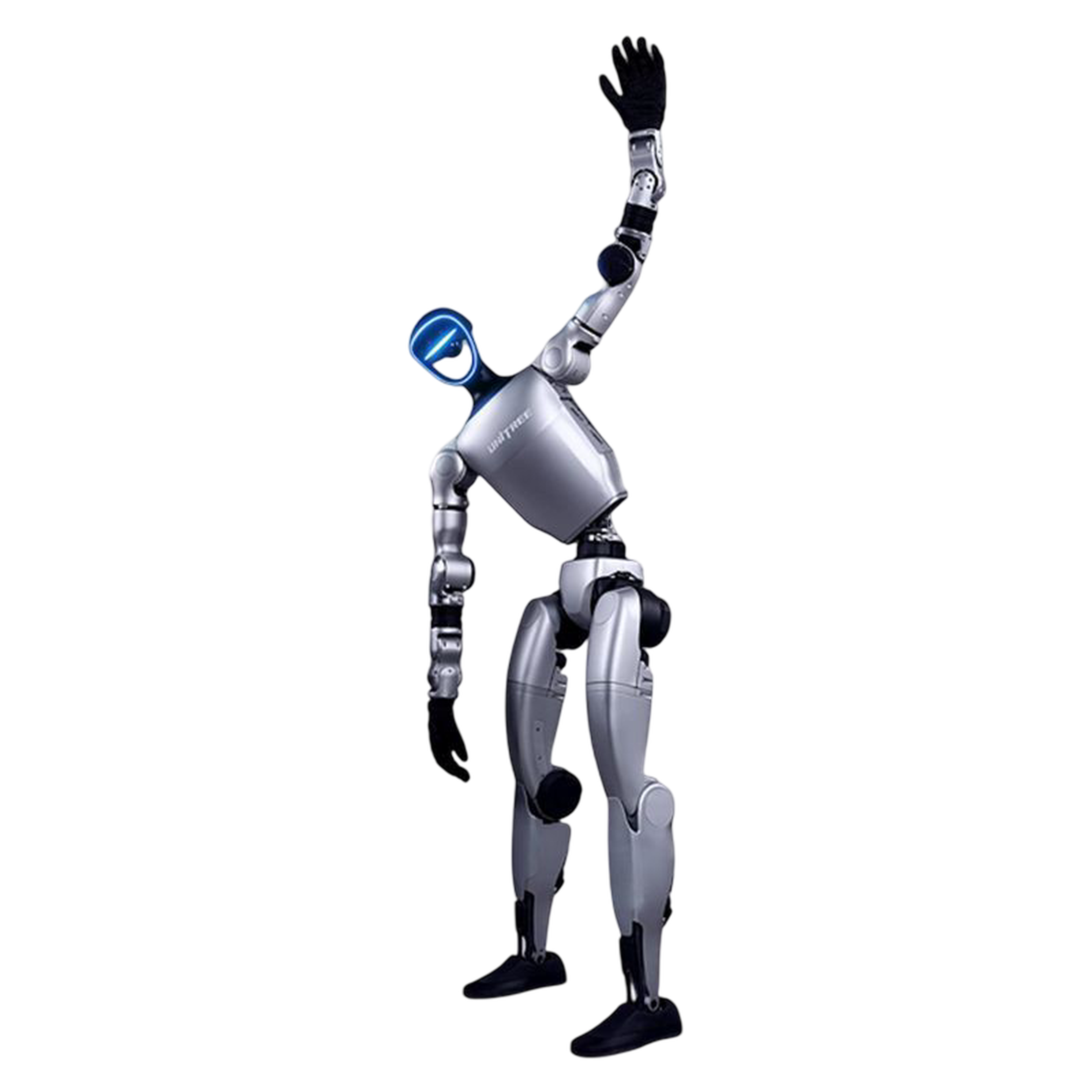
Humanoid Development Platform Unitree G1 EDU U13
The Unitree G1 EDU U13 is a 1,270 mm tall humanoid development platform for research, education, and advanced robotics projects. Weighing around 35 kg, the robot is suitable for laboratory and demonstration setups. The replaceable 13S smart battery provides approximately two hours of operation, depending on motion and computing load. A depth camera and 3D LiDAR provide environmental data for perception, navigation, and autonomous experiments. Dual encoders at the joints, internal cable routing, and local air cooling support repeatable motion. Knee joints with up to 120 Nm of torque and an arm payload of up to 3 kg provide the foundation for dynamic motion sequences, grasping experiments, and mobile manipulation. The payload and motion profile must be adapted to the experimental setup.
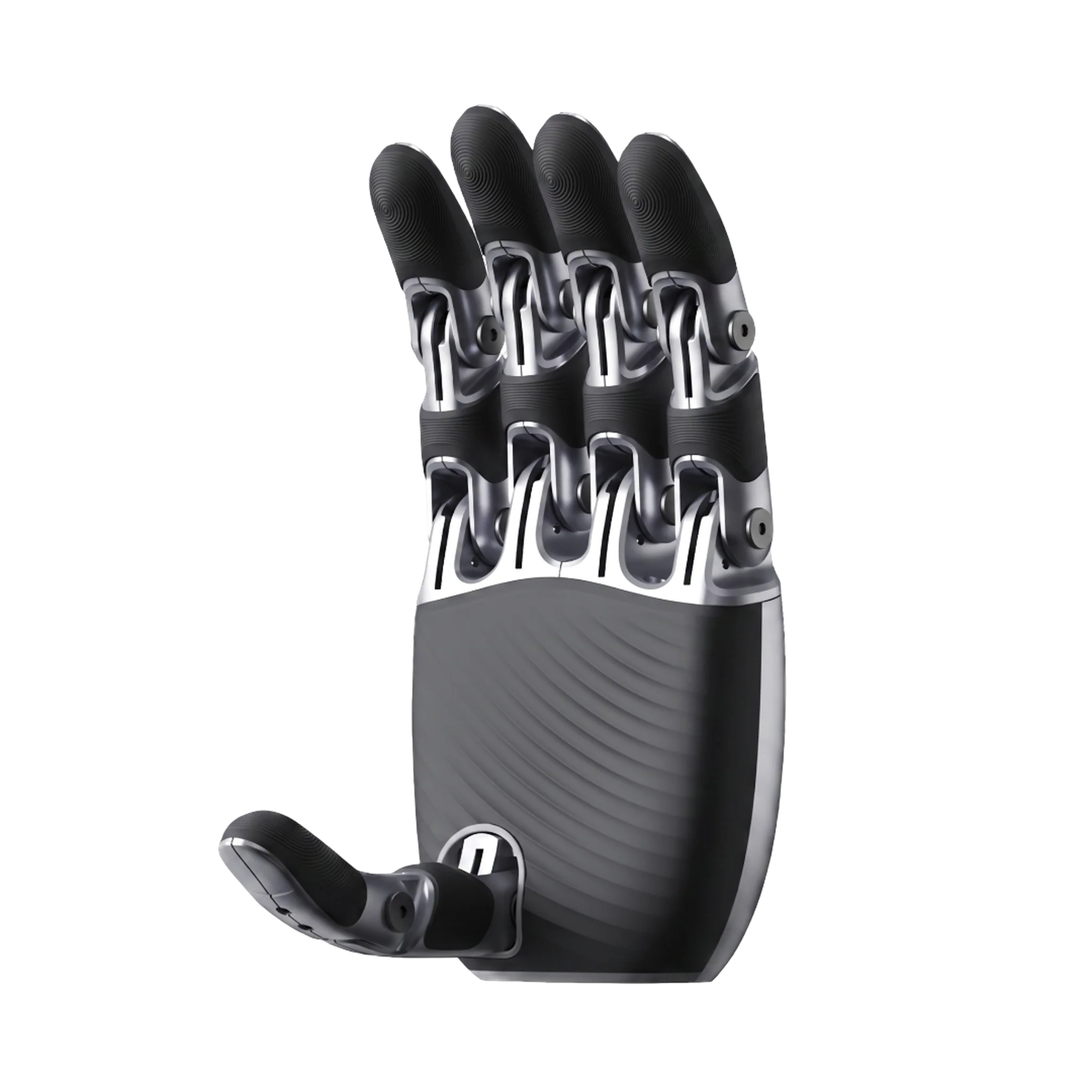
Dex2/5 Tendon-Driven Hands on the Unitree G1 EDU U13
The G1 EDU U13 is configured with Dex2/5 five-finger tendon-driven hands without tactile sensing. Each hand features ten degrees of freedom and a tendon-driven transmission mechanism. The five fingers enable a wide range of grasping patterns and are suitable for experiments with objects of different shapes. Each hand weighs 365 g. Wrist-mounted RGB cameras provide image data for object detection, grasp point detection, and vision-guided manipulation. The tendon-driven architecture eliminates external cabling between the hands and the robot body, resulting in a compact, aesthetically clean, and highly reliable design. Since the hands do not feature tactile sensing, contact conditions and gripping forces must be controlled through the control system, known object characteristics, and appropriate motion limits.
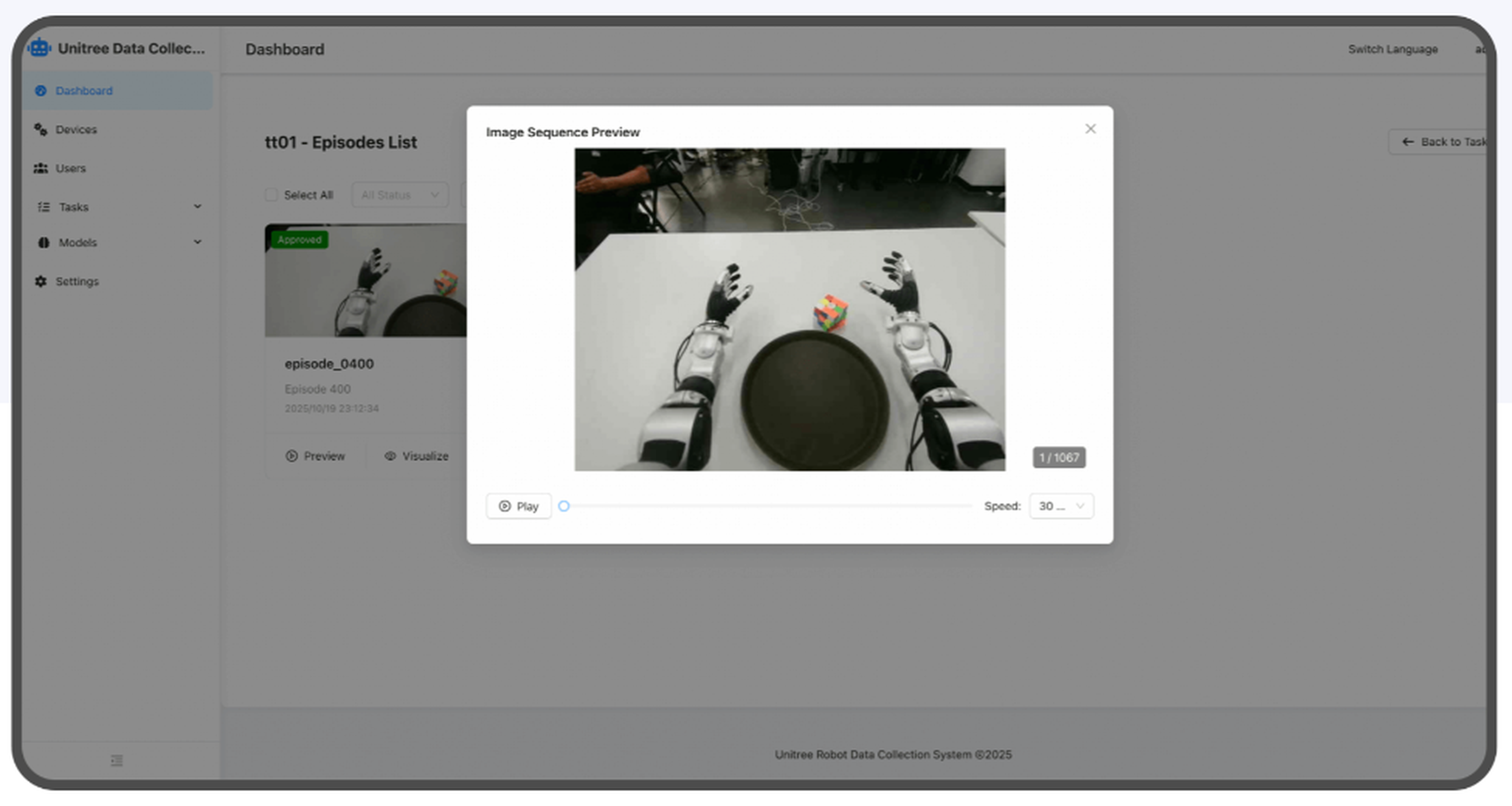
Control and Programming the G1 EDU platform
The G1 EDU platform provides high-level and low-level interfaces for custom applications. Developers can implement motion sequences, joint-level control tasks, and manipulation processes. The integrated expansion dock with up to 100 TOPS is suitable for AI algorithms, machine vision, navigation, and positioning. Wi-Fi 6 and Bluetooth 5.2 facilitate integration into laboratory environments, while Smart OTA supports system updates. When programming the Inspire DFQ hands, finger positions and wrist camera data can be integrated into object planning. This enables vision-guided grasping sequences for objects of different shapes. Control cycles, force limits, collision zones, and abort conditions must be defined for the specific project and tested before operation.
Secondary Development and Applications
The open EDU version supports secondary development and is suitable for projects that go beyond predefined motions. Typical areas include humanoid locomotion, balance control, AI-based perception, navigation, human-robot interaction, and manipulation. Universities can use the robot for computer science, mechatronics, control engineering, and machine learning. Companies can conduct feasibility studies for inspection, teleoperation, service tasks, or handling lightweight objects. Hands and grippers available depending on the specific variant further expand the range of experimental applications. Since the G1 is classified as a research and educational platform or partly completed machinery, a risk assessment, safety concept, and application-specific integration are required.
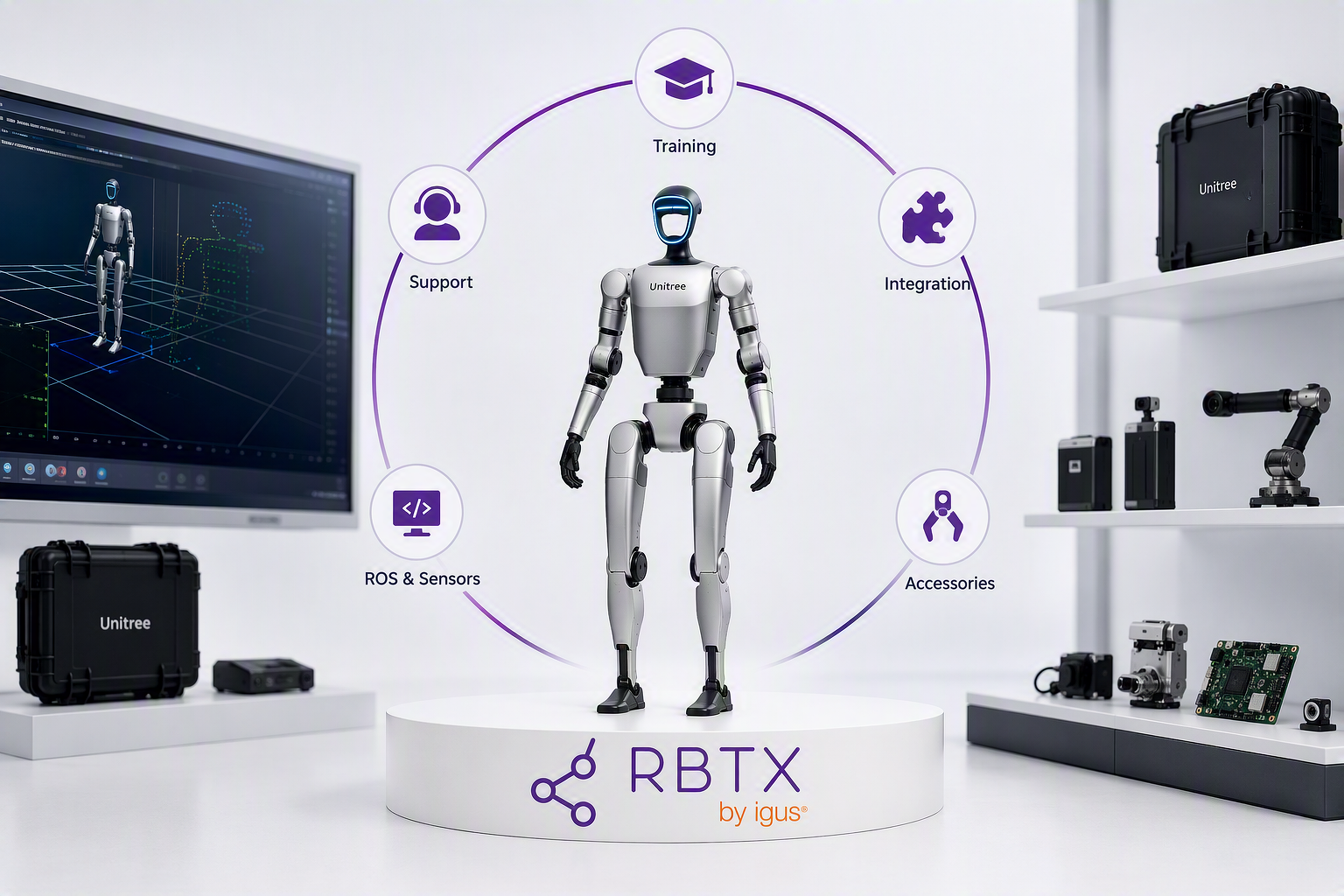
Training, Accessories, and Integration provided by RBTX
RBTX supports users in selecting the Unitree G1 EDU U13 and setting up a complete, functional robotics system. This includes training for operation, commissioning, and programming, as well as selecting accessories, end effectors, sensors, and safety components. For development projects, RBTX can support the coordination of the robot, software, network, computing hardware, and experimental setup. Integration focuses on interface validation, defining system functions, and involving suitable integration partners. This helps determine at an early stage which components are required for a demonstrator, research project, or proof of concept. Safety requirements, responsibilities, and acceptance criteria are considered from the outset based on the intended application.